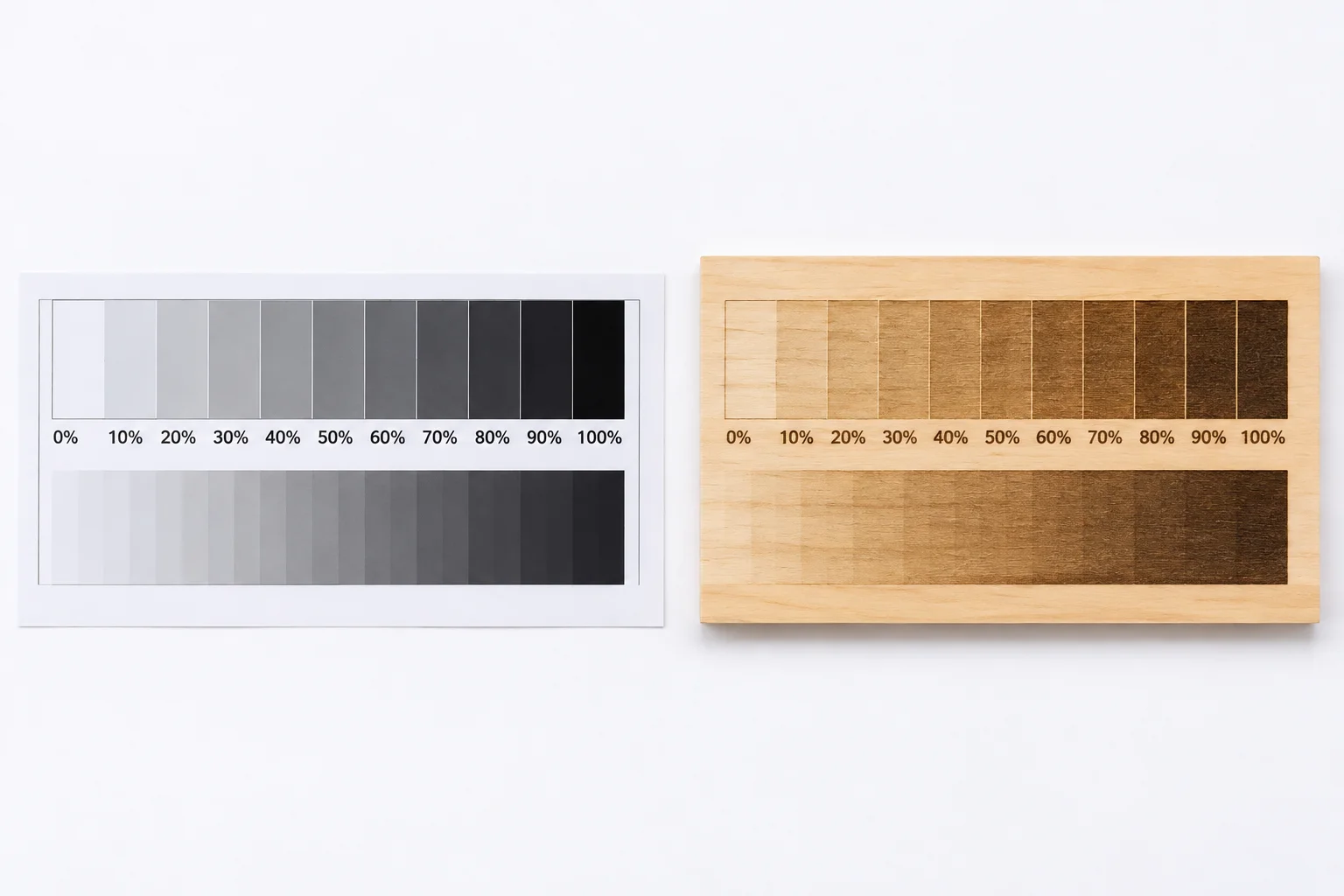
Why Baseline Conditions Matter
Two grids burned with identical files can look different because the starting conditions were different — not because the machine changed. Recording the baseline turns a confusing discrepancy into a diagnosable variable. Without it, every comparison between sessions is speculation.
Baseline data also travels with the record. A colleague or a future operator reading the sheet can judge whether their environment resembles the one that produced the reference result.
Environmental Variables to Log
Ambient temperature and relative humidity lead the list: organic substrates absorb moisture, changing both thermal conductivity and ignition behavior. Workshop airflow and extraction status matter as well, since plume removal affects how much residue redeposits on adjacent cells.
Seasonal drift is real. A ledger entry made in a dry, heated winter shop is not interchangeable with one made during humid summer conditions, and the sheet should say which is which.
Hardware and Material State
On the machine side, record the laser source type and rated wattage, lens focal length, verified focus datum, assist gas type and pressure, and the cleanliness state of optics. On the material side, note species or alloy, nominal and measured thickness, surface finish or coating, vendor, and batch identifier where available.
Stock preparation belongs here too: sanding, degreasing, masking film presence, and storage conditions all alter how the surface accepts the beam.
A Minimal Conditions Checklist
- Date, time, operator, machine, and software version.
- Ambient temperature and relative humidity at the worktable.
- Material identity, thickness as measured, surface preparation, and batch reference.
- Focus verification method, assist pressure, and extraction state.
- Lens and mirror condition at the time of the trial.
Ten fields, one minute of writing — and every grid in the ledger becomes interpretable across months of production.