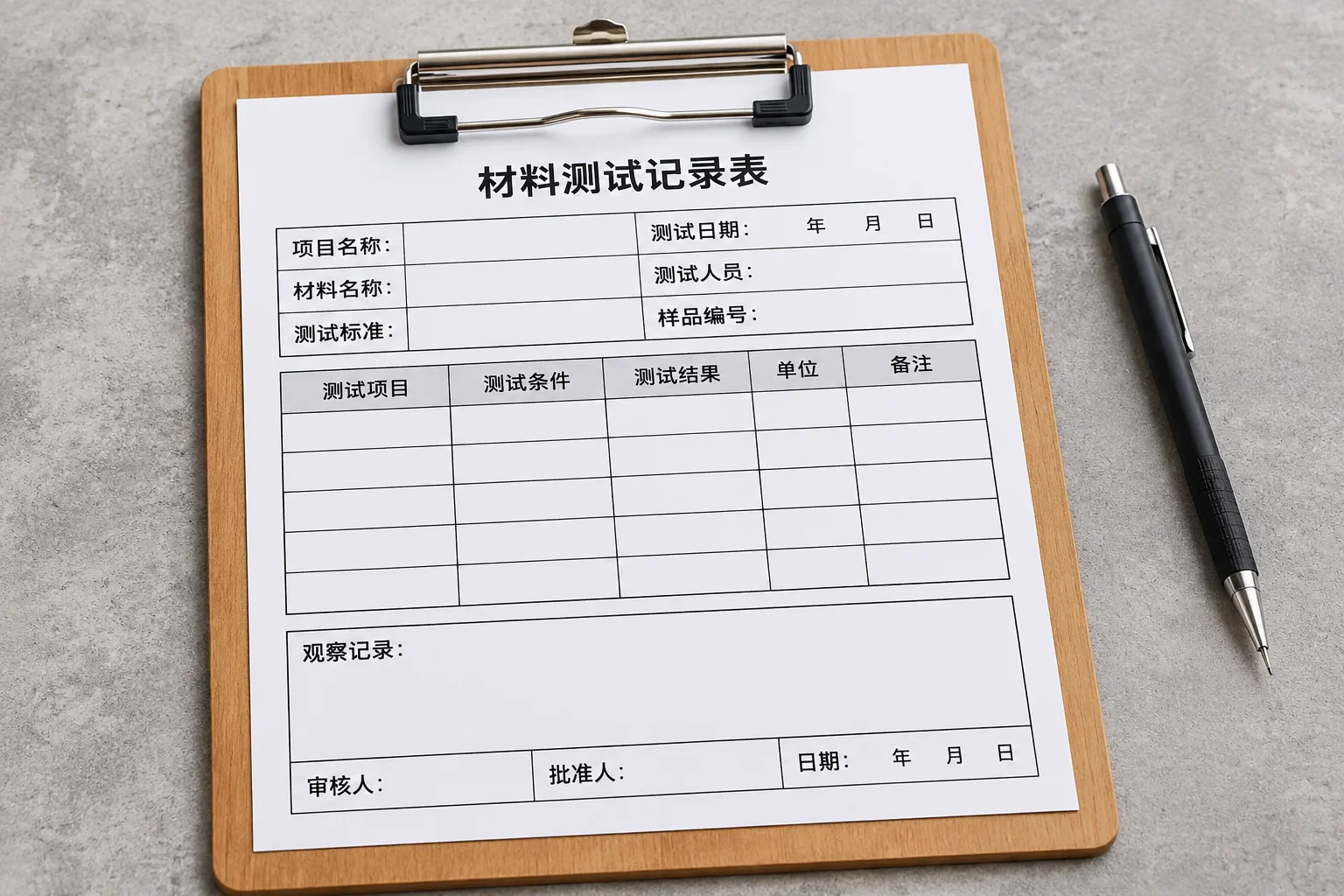
Anatomy of an Observation Card
Every card splits into the same four blocks: identity (trial ID, date, operator, machine), subject (material, batch, thickness, preparation), execution (axis assignments and fixed settings), and outcome (cell-level or region-level observations plus a verdict line). Keep the block order fixed so any reader can scan a shelf of cards the same way.
Short-Form Card Example
For routine scouting grids, a compact card captures the essentials in under a minute:
- Trial ID / Date / Operator: ledger identifier, session, initials.
- Material: species or alloy, measured thickness, batch.
- Grid: axis variables, step counts, fixed settings summary.
- Outcome: first mark cell, stable cluster extent, first failure cell.
- Verdict: one line — usable window, marginal, or retest needed.
Detailed Card Example
Qualification trials warrant the long form. In addition to the short-form fields, it adds ambient temperature and humidity, optics condition and focus verification method, assist gas type and pressure, per-region observation lines, inspection method used, photo references, and a follow-up action field for the next planned trial.
Linking Cards to Grid Coordinates
A card earns its keep when a reader can trace each note back to a location on the grid. Reference cells by coordinate (column, row) or by named review region, and photograph the sheet beside its card so the image and the entry verify each other. When a repeat trial is filed, cross-reference the earlier card ID so comparisons remain explicit rather than remembered.